URBAN · ENERGY · EQUITY
Research Areas
Our research is organized around three interconnected dimensions of urban energy systems, spanning urban form, spatial inequality, and climate transition.
01
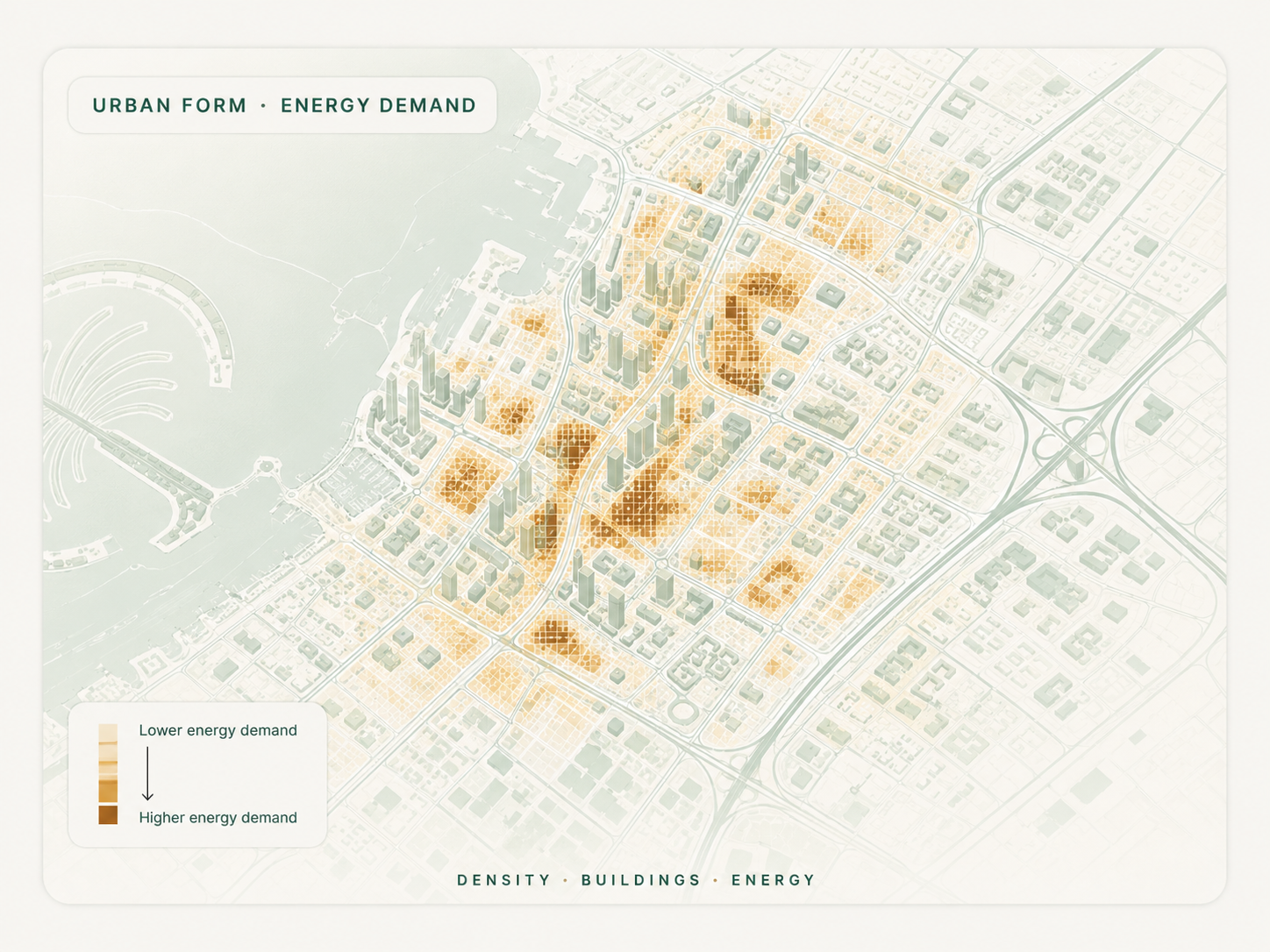
Urban Form, Buildings & Energy Demand
Examining how density, land use, building characteristics, and spatial structure influence energy consumption and efficiency. We connect the physical shape of cities to how — and how much — energy they use.
Density & land use
Building stock
Efficiency
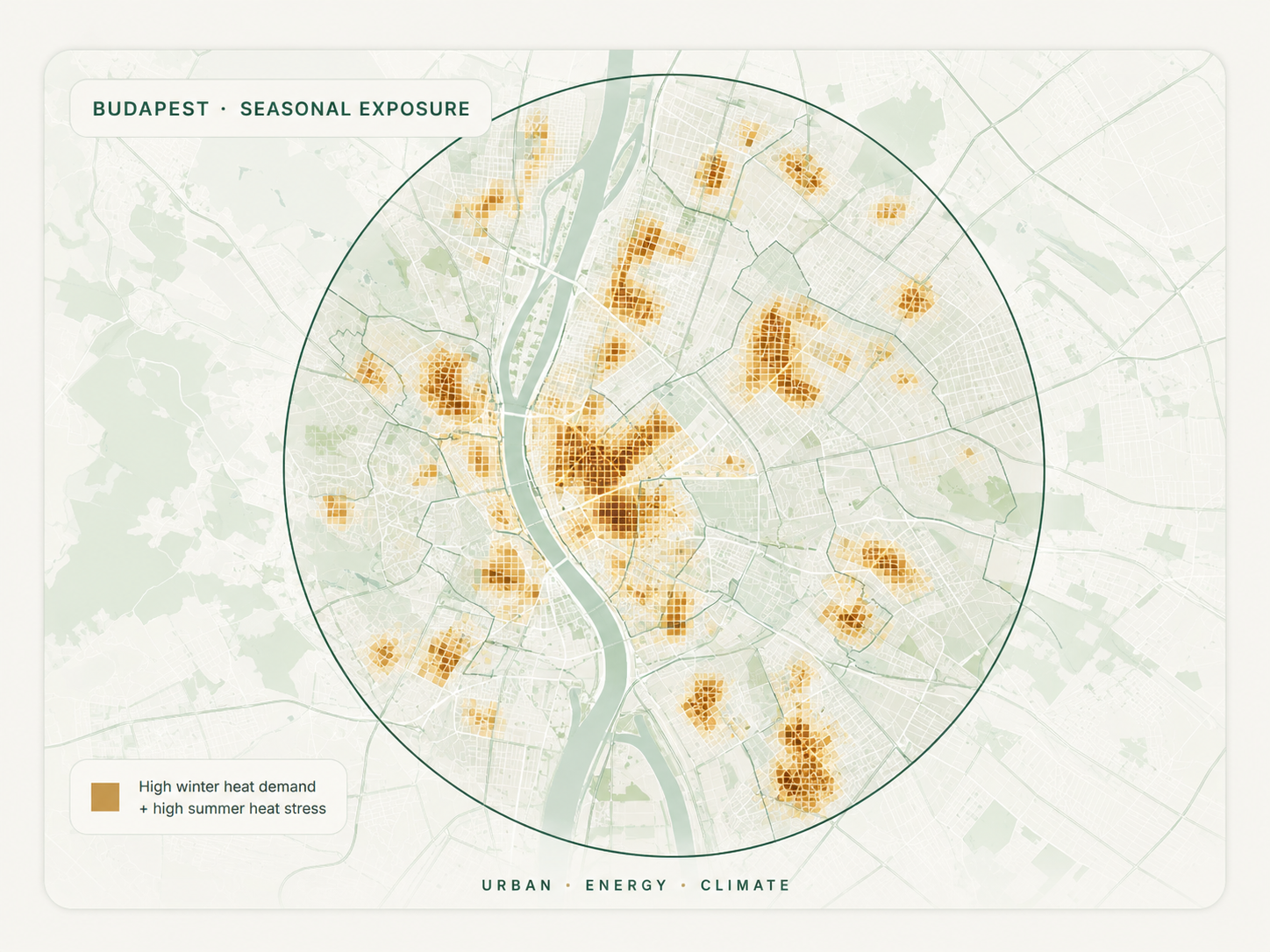
Climate Risk & Green Transition
Studying how cities and buildings respond to heat, climate stress, decarbonization, and changing energy systems, and how transition capacity is distributed unevenly across places.
Heat & climate stress
Decarbonization
Transition capacity
02
03
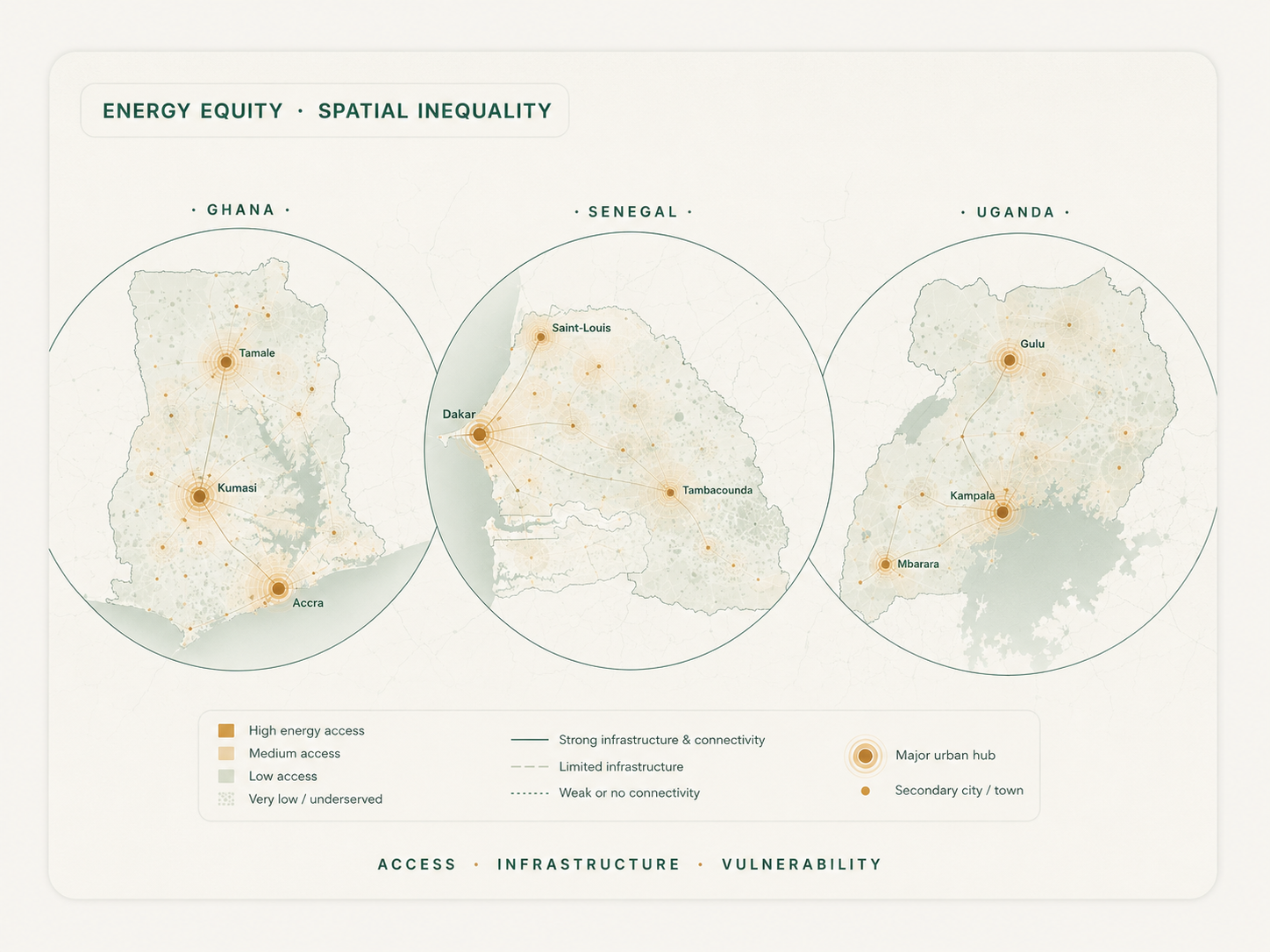
Energy Equity & Spatial Inequality
Investigating how energy access, affordability, infrastructure, and vulnerability vary across neighborhoods and population groups, and why these differences persist across space.
Access & affordability
Infrastructure
Vulnerability